doi: 10.56294/hl202443
ORIGINAL
Student satisfaction and quality of institutional life in Higher Health Education
Satisfacción estudiantil y calidad institucional en la Educación Superior en Salud
Michel Oria Saavedra1  *, Gloria Concepción Rojas Ruíz1 , Anibal Espinosa Aguilar1 , Jazmin Sebastiana Vaesken Rojas1 , Elias Hernán Presentado Mora1 , Cindi Jazmín Pérez Miño1
1Instituto Superior en Ciencias de la Salud “Juan Pablo II”. Caacupé, Paraguay.
Cite as: Oria Saavedra M, Rojas Ruíz GC, Espinosa Aguilar A, Vaesken Rojas JS, Presentado Mora EH, Pérez Miño CJ. Student satisfaction and quality of institutional life in Higher Health Education. Health Leadership and Quality of Life. 2024;3:43. https://doi.org/10.56294/hl202443
Submitted: 13-09-2023 Revised: 16-11-2023 Accepted: 20-02-2024 Published: 21-02-2024
Editor: Dra.
Mileydis Cruz Quevedo
Translated by: Cristhian Alejandro Pérez Pacheco *
ABSTRACT
Introduction: Higher Education institutions seek to achieve institutional quality and influence student satisfaction. This is a feature that deserves an analysis that brings it closer to the particularities of the training of health students. Well, although it is a frequent topic under discussion, university demands increase.
Objective: analyze current theoretical conceptions about student satisfaction and institutional quality of life in Higher Health Education.
Method: integrative review for a critical and reflective analysis of contents of documents published between 2017-2023 with a methodology and theoretical reference. Keywords identified in DeCS and MeHS and Boolean operators were used: “higher education policy AND “health education” AND “universities” AND “medical education” AND “health students”, AND “accreditation”. The search strategy was carried out in the Índex, SciELO, Redalyc, Dialnet databases. The flow chart (PRISMA) was used to formulate the search strategy, 102 articles were identified and reviewed, of which 11 were useful regarding the evolution of the category. The following inclusion criteria were considered: original or review studies, available in full text, that declared the methodology applied, published in English and Spanish.
Conclusions: the conceptions of student satisfaction and institutional quality in Higher Health Education reveal the starting point for research. They show the complexity of the categories, which prevents delving into each independent one, and proportional relationships. Operational definitions are offered that contain the relationships.
Keywords: Higher Education Policy; Health Education; Universities; Medical Education; Students in The Health Area; Accreditation.
RESUMEN
Introducción: las instituciones de Educación Superior, buscan el logro de la calidad institucional e influir en la satisfacción estudiantil. Este es un rasgo que merece un análisis que lo acerque a las particularidades de la formación de estudiantes de salud. Pues, aunque es un tema frecuente en discusión las exigencias universitarias aumentan.
Objetivo: analizar las concepciones teóricas actuales sobre la satisfacción estudiantil y calidad institucional en la Educación Superior en Salud.
Método: revisión integrativa para un análisis crítico y reflexivo de contenidos de documentos publicados entre el 2017-2023 con una metodología y referencial teórico. Se utilizaron palabras clave identificadas en DeCS y MeHS y operadores booleanos: “política de educación superior AND “educación en salud” AND “universidades” AND “educación médica” AND “estudiantes del área de la salud”, AND “acreditación”. La estrategia de búsqueda fue realizada en las bases de datos Índex, SciELO, Redalyc, Dialnet. Se utilizó el diagrama de flujo (PRISMA) para la formulación de la estrategia de búsqueda, se identificaron y revisaron 102 artículos, de los que fueron útiles 11 de la evolución de la categoría. Se consideraron como criterios de inclusión: estudios originales o de revisión, disponibles a texto completo, que declararan la metodología aplicada, publicado en los idiomas inglés y español.
Conclusiones: las concepciones sobre la satisfacción estudiantil y calidad institucional en la Educación Superior en Salud, revelan el punto de partida para investigaciones. Muestran la complejidad de las categorías, que impide profundizar en cada uno independiente, y relaciones proporcionales. Se ofrece definiciones operacionales que encierran las relaciones.
Palabras clave: Política de Educación Superior; Educación en Salud; Universidades; Educación Médica; Estudiantes del Área de la Salud; Acreditación.
INTRODUCTION
Student satisfaction is a responsibility of each institution that educates professionals, constituting a commitment to the students who study there. It not only reflects the quality of the university’s work, but also translates into competent and competitive graduates. Competitiveness is a paradigm of the labor world that demands and requires professionals whose output reflects the work developed during their education.
Meanwhile, student satisfaction as a category to be investigated, positions Higher Education institutions in an innovative stance, this is not only because individual demands from the student community increase but also because institutional and disciplinary quality evaluation systems require it. Thus, it represents the convergence between student satisfaction and institutional quality.
In light of these ideas, there is a recognized need to analyze the conceptions of the categories “student satisfaction” and “institutional quality”, as their relevance becomes more significant in fostering a committed university. Therefore, within these conceptions and their relationships, it is possible to identify dimensions and indicators that will lead to success after implementing actions that promote their fulfilment.
In turn, institutional quality is both the object and subject of evaluation, through whose results, identified problems are overcome and opportunities are seized for solutions. This makes this theme of particular interest for the authors of this text.
It is evident, therefore, that evaluating the quality of educational systems becomes crucial for optimizing results and ensuring transparency, which effectively contributes to making efficient educational policy decisions. Hence, analyzing the quality of the university institution involves examining a phenomenon and process with theoretical contrasts, where discourses contain conceptual ambiguity that requires successive critical reviews as changes occur and social demands evolve. It is also a pedagogical category reflecting a mode of education imbued with religious, political, cultural, and socio-economic perspectives.(1)
The visualization of the aspects and congruences between these two categories is necessary. Although published studies with theoretical analyses on these topics have been identified, the exploratory systematization does not identify analyses addressing their relationships. Therefore, the interest in this systematic review is to analyze current theoretical conceptions regarding student satisfaction and quality of institutional life in Higher Health Education.
METHODS
An integrative systematic review was conducted, encompassing original and review articles. The methodology proposed by Arksey and O’Malley(2) was employed when conducting the review, involving the following steps: elaboration of the research question; establishment of inclusion and exclusion criteria and systematic search; review and selection of studies; data extraction; as well as analysis and report of the results.
The PICO strategy was employed, adopting this format by considering the elements: P.- Problem, I.- Interest, C.- Comparison y Context, and by framing P (Student satisfaction and quality of institutional life), I (Students), C (Not applicable) and Context (Higher Education) for the research question: How are student satisfaction and its relationship with institutional quality in Higher Education presented in scientific literature? Keywords identified in DeCS and MeHS, along with Boolean operators were used: “higher education policy AND “health education” AND “universities” AND “medical education” AND “students in the health area”, AND “accreditation”. The search was conducted in the Índex, SciELO, Redalyc, Dialnet databases, which showed relevance to the subject matter and contained publications from the last five years, spanning from 2017 to 2023.
The search strategy utilized in the selected databases for research purposes was developed based on accepted descriptors.
The Preferred Reporting Items for Systematic Review and Meta-Analyses (PRISMA) flow chart(3) was utilized to aid in the formulation of the search strategy. In this way, both Spanish and English descriptors were employed for the search. The data search strategy is described in table 1.
|
Table 1. Search Strategy by Database |
||
|
Database |
Descriptors |
Search Strategy |
|
Índex, SciELO Redalyc Dialnet |
higher education policy health education universities medical education health area students accreditation |
((((higher education policy) AND (health education) AND (universities) AND (medical education) AND (health area students) AND (accreditation)))) |
Duplicate studies were identified and eliminated, and titles, abstracts, and keywords of publications were reviewed, as well as full articles, considering inclusion and exclusion criteria. Relevance to the study was verified, and articles had to demonstrate adherence to the addressed topic.
A critical evaluation of the included studies was conducted through content analysis, discussion, and interpretation of results. This involved carrying out comparisons, interpretations, and assessments by the authors, and presenting the review’s findings. In the investigation, 102 articles were found, and 11 of them were selected. The search systematization flow in the databases is described in figure 1.
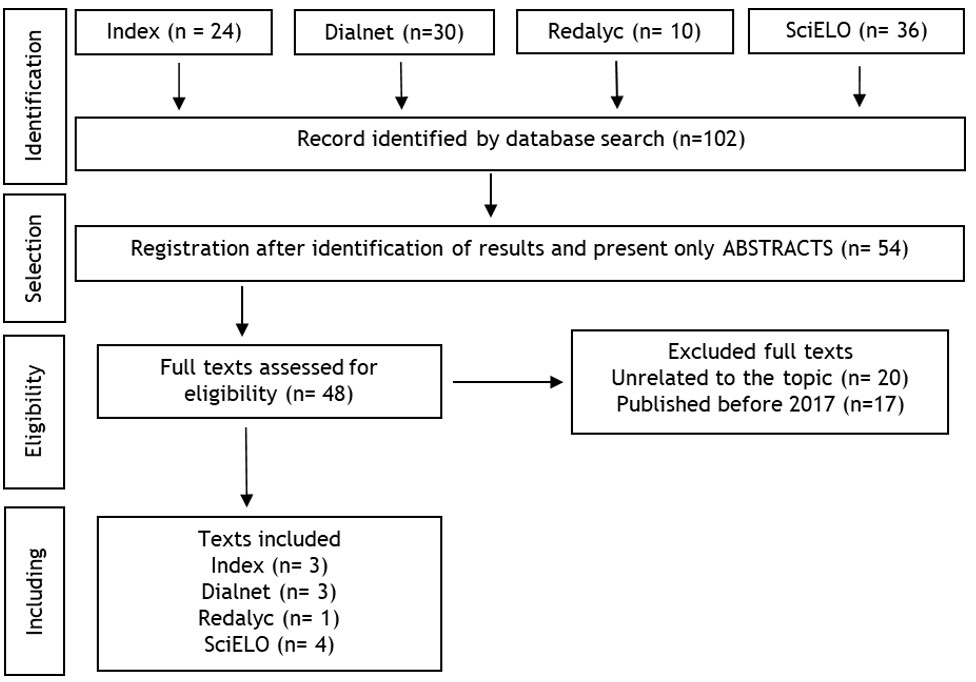
Figure 1. Flowchart of the search systematization in the SciELO, Dialnet, Redalyc, and Index databases. Cordillera, Paraguay, 2024
RESULTS
Table 2 shows a matrix for the discussion of results included in the study.
|
Table 2. Matrix of results |
|||
|
Authors / Year / Country / Database |
Objetive |
Results |
Conclusions |
|
Ruvalcabar et al. (4) /G/2022/Mex/index |
To conduct a diagnostic assessment of the student satisfaction level with educational services, at a private university in southern Mexico during the academic year 2021-2022. |
The findings showed that the dimension in which students are most satisfied is the teaching ability of the professors, whereas the administrative services dimension obtained the lowest level of satisfaction. |
The level of student satisfaction with educational services is closely situated to a high level of satisfaction. |
|
Manrique Maldonado et al.(5) /2019/Mex/dialnet |
To evaluate the level of student satisfaction regarding the courses given in the distance learning modality by the same university. |
It was identified that the communication process is an important variable for student satisfaction, as facilitators provide limited feedback and are not perceived as motivators, which impedes a friendly environment that contributes to the diminution of dropout rates. |
Achieving student satisfaction in universities is one of the principal objectives in their growth and development as knowledge-generating institutions, as it is their raison d'être. |
|
Raza Carrillo D et al.(6) /2022/Arg/index |
To preset a critique of the measurement of student satisfaction as a parameter of quality in higher education. |
Greater satisfaction does not necessarily involve a higher level of intellectual learning outcomes in the educational process. |
Alarm about the risk of perceiving students as mere consumers, a perspective that could lead to a reduction of the complexity. |
|
Vega Sampayo et al.(7) /2022/Col/SciELO |
To analyze the mediator effect of ICT in the relationship between innovation capacity and student satisfaction in Colombian HEIs. |
The variables are interrelated, and ICT moderates the relationship between innovation capacity and student satisfaction. |
There is a significant relationship between innovation capacity and student satisfaction that is mediated through ICT in HEIs. |
|
Mireles Vázquez et al.(8) /2022/Mex/SciELO |
To review systematically the literature reported about student satisfaction. |
During 2019, there was a higher publication rate on the topic, with Latin American countries having the highest number of publications, covering a mixed range of subjects. Bachelor students were the most studied learners through the use of questionnaires. |
The most important components of student satisfaction were good reputation and quality of the institution, teaching, mentoring, and motivation. |
|
Marin F et al.(9) /2017/Col/redalyc |
To understand the meanings that educational actors attribute to the Institutional Improvement Plan; where the macro, meso, and micro aspects of educational policy converge. |
The findings evince gaps between the normative framework and the operationalization of the plan. It is concluded that there is a need for a strategic culture of participation for decision-making as the foundation of school management. |
Processes for transforming the reality of the educational context are made viable, visualizing, in a critical and constructive field, the factors that drive or inhibit the design and execution of the Plan under study. |
|
Turpo Chaparro J et al.(10)/2017Per/index |
To determine the relationship between the quality of academic services and organizational culture in the institutional image of a private confessional institution. |
Significant relationships were obtained between the studied variables and their dimensions. |
A positive assessment of the institutional image is affected by organizational culture and the quality of educational services. |
|
Mínguez Vallejos R et al.(1)/2020/Chi/SciELO |
To analyze the repercussion of the institutional accreditation process on the self-regulation capacity in the areas of institutional management and undergraduate teaching at the University under study. |
The results suggest that institutional accreditation appears to function more as a strategy to strengthen the role of self-regulation in academic and administrative management of institutions than as a mechanism for quality assurance per se. |
According to participants, sufficient attention has not yet been granted to this aspect in external evaluation processes of universities. |
|
Pedraja-Rejas et al.(11) /2020/Ven/dialnet |
To analyze the relationships among transformational leadership, innovative culture, and quality in higher education institutions. |
The transformational leadership style significantly influences innovative culture; with the latter being a determinant variable for the quality of institutions. |
Neither the leadership style employed by leaders nor the culture promoted in these institutions is trivial, as they can make a difference in quality, expressed in the years of institutional accreditation. |
|
Paredes-Chacín et al.(12) /2020/Col/dialnet |
To analyze higher education and research in Latin America and the transition to the use of digital technologies due to COVID-19. |
The outcomes determine that information about academic programs is accessed through digital environments. In matters of research, there is scant projection on advancements during times of pandemic, generating uncertainty regarding the dynamization of the science-technology-humanities trilogy in Latin America. |
The importance of technologies in addressing student dropout is inadequately disseminated. In research, the visibility of strategies ensuring continuity is omitted, generating stagnation or delays, impacting scientific and technical progress. |
|
Pinilla AE(13) /2018/Col/SciELO |
To expose a perspective on education in Health Sciences and Medical Education. |
The model or pedagogical approach of traditional training with a teacher as the knowledgeable figure, and a student as a passive recipient, grounded in the perspective of positive science that conceives knowledge as something culminated. |
A professional in health sciences that begins to develop competencies at a university with autonomy, supported by teachers/facilitators in a favorable environment offered by a curriculum, within the framework of a pedagogical model. |
Student satisfaction
Student satisfaction is one of the indicators that will enable the achievement of academic success, student retention in the institution, as well as positive word-of-mouth evaluation. Therefore, finding commendable methods to understand the reality, compare with competitors, and analyze them throughout time is a consideration highlighted by Alves and Raposo, as cited by Ruvalcabar et al.(4) in 2022.
It is the responsibility of every university to provide comprehensive education to students, ensuring that graduates meet the needs of their environment; therefore, ensuring student satisfaction should be a fundamental part of its vision. Moreover, satisfaction is the outcome of both individual and collective assessment processes. When expressing satisfaction or dissatisfaction with something, a value judgment is emitted based on an evaluation process. All of this occurs within a process of constructing personal meanings and interpretations. (5)
Hence, the considerations expressed by Gento and Vivas, as cited by Manrique et al.(5) in 2019, regarding the process of constructing personal meanings and interpretations are acknowledged. Therefore, analyzing student satisfaction provides insight into the quality of the service provided by the university, including aspects related to the teaching-learning process, infrastructure, and the student environment.
Manrique et al.(5) also deem it relevant to focus the analysis on the fact that students’ change their expectations and needs, and attain competencies and knowledge as they progress in their education while immersed in an ever-evolving context. This development and increasing demand necessitate the continuous updating of study plans and programs to align with new expectations and contexts.
This continuous updating facilitates the fulfillment of the university’s mission to educate professionals capable of performing in a labor market with demands aligned with scientific and technological advancements. These modifications present a challenge that allows the institution to remain at the forefront of educational processes.(5)
In light of these considerations, it is useful to acknowledge that the university should have a mission coherent with its responsibility and commitment to its social purpose. Health education inherently demands professionals with innovative and proactive thinking, and cultivating professionals with such qualities necessitates an updated educational process, with a focus on educational innovation.
Therefore, clear elements regarding student satisfaction are discernible in the analysis, which depend on the quality of the education provided to them, the fulfillment of personal expectations, and the updating of study programs. Thus, in an initial approach, the relationship between student satisfaction and university quality becomes apparent.
The aforementioned is revealed in the ideas exposed by Raza Carrillo et al.(6), by recognizing the common thread in research from over thirty years. These investigations draw connections between the concepts of student satisfaction and quality, theoretical categories that are often regarded as synonymous. Nevertheless, the concept of student satisfaction has not achieved a clear conceptualization on its own due to its multifactorial and subjective nature.
This character is evident in the diverse elements determining satisfaction, including individual or group knowledge base, worldview, perception, personality traits influencing choices, and the environment.(6) It is worth noting that, although this analysis presents theoretical elements related to student satisfaction, the category of university quality is also perceived in a categorical relationship.
It is clear that, over the years of analysis, similar categories have been observed. The authors of this analysis acknowledge the essence of the problem to be investigated. On the other hand, the economic context in which higher education and its institutions operate also ensures student satisfaction. In this regard, it is necessary to have innovative initiatives that allow for process improvement, aiming to provide exceptional service that ensures the satisfaction of all actors.
Consequently, Vega Sampayo et al.(7), asserted that the improvement of provided services is a constant necessity to attain student satisfaction. This encompasses various aspects such as library systems, computer rooms, laboratories, university well-being, enrollment system, as well as all available physical resources. Therefore, meeting or surpassing student expectations requires concerted efforts to achieve optimal satisfaction outcomes.
A compilation of information on this topic was provided by Mireles Vázquez et al.(8) in 2022. These researchers identified that student satisfaction can be analyzed from three perspectives: facilities and services, academic aspects, and social aspects. They also acknowledge other variables intervening in the process such as economic factors, cultural level, as well as personal elements like sex, age, and personality traits.
The analysis enables us to recognize that satisfaction is a complex category, whose characteristics depend, as mentioned earlier, on both objective elements determined by the institutional scope in meeting the requirements demanded by contemporary universities and subjective elements contained in student diversity. Therefore, being a complex category, resources must be mobilized to meet the demands of the system and the needs of the user.
University quality
To analyze university quality, it is necessary to consider that it converges into a structural and functional dynamic based on the flow of cooperation, quality standards, and academic and social relevance. And therein lies the need for the active participation of its actors, so that institutional management at the levels of conceiving plans and organizational policies, curriculum and instructional scope converge. As such, quality is associated with principles such as mutual assistance, commitment, formality level, relationships, and mechanisms that promote integrated and interdisciplinary collaboration.(9)
Researchers such as Turpo Chaparro J et al.(10) in 2017, conducted an analysis of educational quality and its correlation with corporate image. They suggest that it is necessary to understand how institutions are perceived by competitors, how they are perceived by the general public, and based on this, to constantly monitor and improve the perceived image. Interest in institutional image has led to a growing number of studies and proposals, encompassing market research, investigations into organizational culture, assessments of educational service quality, and studies on brand and institutional image.
According to Cervera, Martí, and Ríos, as cited by Mínguez Vallejos et al.(1) in 2020, the concern for the quality of Higher Education underwent a revolution in the last decades of the 20th century. Research on the subject exposed new inequities stemming from differences in the quality levels of institutions, graduation rates from mid-level education, and university admission mechanisms. All these elements that threatened the university as an educational institution brought about a mechanism within educational policies, which is the evaluation of the quality of higher education. While it is true that society cannot progress without the advancement of knowledge, the university becomes the space of greatest creation and transmission of the best knowledge. To such an extent that it becomes one of the indicators on which the quality of higher education institutions is focused.
A significant moment in the discussion on university quality occurred during the Paris Conference, where the definition of quality, previously tied to the function of the university, underwent a redefinition in light of technological, economic, social, and cultural changes in societies. However, addressing university quality is also considered complex, leading experts to prefer referring to the overall quality of the institution rather than the quality of the education that students receive.(1)
The points discussed in these last paragraphs complicate the analysis by considering that, when conceptualizing student satisfaction, researchers assumed it to be a category that behaved like university quality, meaning that they were synonymous. However, upon contrasting these elements with the qualities of university quality, it becomes apparent that they are not entirely agonistic in their broad sense, as there are other factors involved that influence the variables of each one particularly, which need to be considered.
Quality is a complex concept due to the multiple definitions among different actors within an academic community. It is also considered that, there are three fundamental pillars: teaching, research, and social impact, with research being one of the fundamental pillars of higher education at present. This plurality of definitions is reflected in the number of factors involved, such as knowledge management processes, sustainable development of university leaders, and technologies for teaching practices. Moreover, some studies take into account leadership and organizational culture.(11)
Higher education in contemporary times: realities in Health Education, student satisfaction, and university quality
Higher education, along with research, is one of society’s substantive functions that has achieved advancements in the last decade, promoted through multilateral organizations governing educational trends in Latin America. (12) However, in contemporary times, trends have been identified that run counter to the university’s role as a knowledge generator, which is influenced by the perception that the university is a player in the service industry.
These trends highlight the client-oriented nature of students, resulting in a dynamic of supply and demand. Meanwhile, institutional competitiveness has influenced both competitiveness and university quality, by prioritizing student interests at all costs.(6)
This trend of seeking satisfaction in supply and demand positions the student as a customer, adhering to the principle that “the customer is always right”, which can easily distort the very purpose of education. However, prioritizing mere student satisfaction contradicts the ontological discussion of “the strange, the uncomfortable”. Within this discourse, it is argued that provoking a certain degree of distress, rather than comfort, can be a path for students to seek self-awareness and intelligibility within a transformative and edifying process.(6)
On the other hand, it is useful to analyze the encyclopedic nature of education in many Latin American contexts currently, inherited from the twentieth century, which promoted a traditional, classical pedagogical model where theory precedes practice and emphasizes the accumulation of information and topics through memorization and repetition-based learning. In this trend, the student is once again placed as a passive recipient who memorizes to pass an exam.(13)
The commodification of the university and the rote nature of learning along with their consequences, contribute to short-term or long-term dissatisfaction, thereby affecting the quality indicator of education. This criterion underscores the trend that characterizes the multifaceted nature of both categories. At this juncture, particular aspects are considered for subsequent analysis. Changes are envisioned through the identification of features driving the transformation of practices whose obsolescence indicates a path that appears to be in decline, especially when compared with the outcomes of current trends in education. These trends advocate for work-based education as a guiding principle, where theory and practice constitute inseparable pairs for competency-based education.
In this regard, Pinilla AE(14), since 2018, advocates for a shift in health sciences education towards a socio-constructivist model that focuses not only on problems but also on the patient and the student. This shift aligns with the proposal of the World Health Organization (WHO) since the 1980s. It calls for a new approach to health professional training that centers on the student’s education process, fostering deep and meaningful learning to address priority issues. This approach aims to progress from objectives to the development of integrated professional competencies of knowledge, skills, and attitudes.
The commitment of the authors of this text is aimed at analyzing current theoretical conceptions regarding student satisfaction and institutional quality in Higher Health Education. The gaps that are yet to be addressed, are clear in the systematization, as both student satisfaction and university or educational quality in Higher Education are multidimensional, as expressed earlier.
Therefore, the plural and multicausal nature of these categories is highlighted, acknowledging the relationships that exist between them. The imperative for educational institutions to prioritize attention to the trends of modernity that emerge in the presence of the dynamic nature of formative processes influenced by developmental changes. The influence of actors on their own satisfaction, determined by subjectivity and human diversity, as well as the institutional responsibility to manipulate objective factors, are crucial aspects.
While the analysis provides a comprehensive perspective of these categories, the systematization enables the provision of an operational definition of student satisfaction by conceiving it as a multidimensional university process. Here, students find satisfaction in the educational service, influenced by active knowledge-seeking within perceived individual transformation and knowledge construction. This requires political will from educational institutions with an integrated approach that moves the conditions and mobilizes both subjective and objective aspects of the process, consistent with the developmental trajectory of education that fosters university quality.
As expressed in the preceding definition, university quality is not separate from satisfaction; instead, they operate as categories with proportional relation. At this point, it is also possible to provide an operational definition of university quality, conceptualizing it as a process integral to the institutional mission that fosters a dynamic interplay of structure and functions, enabling the fulfillment of academic and social needs within each context. Institutional management, organizational policies, and actor participation become the driving force that propels the process, whose ultimate goal is particularly focused on student satisfaction, by allowing them to find in their educational institution a space for active knowledge-seeking and the construction of creative, innovative, and critical thinking.
What has been expressed remains open to multiple investigations, as researchers have identified areas that seem novel when exploring a theme that currently serves as a driving force, stemming from real issues that must be addressed. The identified gaps are so numerous, that they are expressed as limitations in this analysis. So, the issues in practice deserve further analysis from the depth and rigor of science, enabling the exploration of all aspects of a common problem for contemporary universities.
On the other hand, the findings obtained are not disregarded, this theoretical analysis compiles criteria that, from various perspectives, are committed to the contribution of science in general. The particular analysis of certain dimensions is not in vain, as it promotes the development of a common learning path and the design and development of deeper research.
CONCLUSIONS
The current theoretical perspectives on student satisfaction and institutional quality in Higher Education in Health reveal the starting point for necessary research. It highlights the complexity of the categories, whose analysis at times prevents a deeper examination into the particular of each one separately, as these categories impose proportional relationships. Moreover, the analysis allows for the provision of operational definitions encapsulating the stated relationships.
REFERENCES
1. Mínguez Vallejos R y Díaz Manrubia A. Repercusión de la acreditación institucional sobre la calidad de la universidad. Un estudio exploratorio. Revista de Estudios y Experiencias en Educación. 2020;19(41):107–123. http://dx.doi.org/10.21703/rexe.20201941minguez7
2. Fernández Sánchez H, King K, Enríquez Hernández CB. Revisiones Sistemáticas Exploratorias como metodología para la síntesis del conocimiento científico. Enfermería Universitaria. 2020;17(1):87-94. https://doi.org/10.22201/eneo.23958421e.2020.1.697
3. Parums DV. Editorial: Review Articles, Systematic Reviews, Meta-Analysis, and the Updated Preferred Reporting Items for Systematic Reviews and Meta-Analyses (PRISMA) 2020 Guidelines. Med Sci Monit. 2021 Aug 23;27: e934475. https://doi.org/10.12659/MSM.934475.
4. Ruvalcabar, O. y Roblero, G. Satisfacción estudiantil con los servicios educativos en una universidad privada del sur de México Revista Varela, 2022;22(62):164-173.
5. Manrique Maldonado KE y Sánchez López M. Satisfacción estudiantil universitaria: un referente para elevar los indicadores de los cursos en línea impulsados por la Coordinación General de Educación Virtual de la UAGro. 2019. Cuaderno de Pedagogía Universitaria; 16(31):17-30. https://doi.org/10.29197/cpu.n31.v16.2019.02
6. Raza Carrillo D, Carrillo Lanas E. Crítica a la satisfacción estudiantil como parámetro de calidad en la educación superior. Cuadernos Universitarios. Publicaciones Académicas de la Universidad Católica de Salta (Argentina). 2022;15(15):31-0. https://doi.org/10.53794/cu.v15i15.509
7. Vega Sampayo, Y, Olivero Vega, E, & Acosta-Prado, JC. Efecto mediador de las tecnologías de la información y la comunicación (TIC) en la relación capacidad de innovación y satisfacción estudiantil, en instituciones de educación superior. Formación universitaria. 2022;15(3):107-118. http://dx.doi.org/10.4067/S0718-50062022000300107
8. Mireles Vázquez, MG y García García, JA. Satisfacción estudiantil en universitarios: una revisión sistemática de la literatura. Revista Educación. 2022;46(2):610-626. http://dx.doi.org/10.15517/revedu.v46i2.47621
9. Marin F, Riquett M, Pinto M, Romero S y Paredes A. Gestión participativa y calidad educativa en el contexto del Plan de Mejoramiento Institucional en Escuelas Colombianas. Opción. 2017;33(82):344-365.
10. Turpo Chaparro J, Jaimes D. Estudio de los vínculos entre cultura organizacional y calidad de los servicios educativos en la imagen institucional de una universidad privada confesional. Apunt. univ. 2017;7(1):97-116. https://doi.org/10.17162/au.v7i1.203
11. Pedraja-Rejas, L., Rodríguez-Ponce, E., y Muñoz-Fritis, C. Liderazgo transformacional y cultura innovativa: efectos en la calidad institucional. Revista Venezolana de Gerencia. 2020;26(96):1004-1018. https://doi.org/10.52080/rvgluz.26.96.2
12. Paredes-Chacín, A, Inciarte, A. y Walles Peñaloza, D. Educación superior e investigación en Latinoamérica: Transición al uso de tecnologías digitales por Covid-19. Revista de Ciencias Sociales. 2020;XXVI(3):98-117.
13. Espinosa Aguilar A, Oria Saavedra M, Rojas Ruíz GC, Lepez CO. Competencias investigativas en profesores de Enfermería. Salud, Ciencia y Tecnología. 2023;4:705. https://doi.org/10.56294/saludcyt2024705
14. Pinilla AE. Educación en ciencias de la salud y en educación médica. Acta Med Colomb. 2018;43(2): 61-65. https://doi.org/10.36104/amc.2018.1365
FINANCING
The authors did not receive funding for the development of this research.
CONFLICT OF INTEREST
The authors declare that there is no conflict of interest.
AUTHORSHIP CONTRIBUTION
Conceptualization: Michel Oria Saavedra, Gloria Concepción Rojas Ruíz, Anibal Espinosa Aguilar, Jazmin Sebastiana Vaesken Rojas, Elias Hernán Presentado Mora, Cindi Jazmín Pérez Miño.
Data curation: Michel Oria Saavedra, Gloria Concepción Rojas Ruíz, Anibal Espinosa Aguilar, Jazmin Sebastiana Vaesken Rojas, Elias Hernán Presentado Mora, Cindi Jazmín Pérez Miño.
Formal analysis: Michel Oria Saavedra, Gloria Concepción Rojas Ruíz, Anibal Espinosa Aguilar, Jazmin Sebastiana Vaesken Rojas, Elias Hernán Presentado Mora, Cindi Jazmín Pérez Miño.
Fund Acquisition: Michel Oria Saavedra, Gloria Concepción Rojas Ruíz, Anibal Espinosa Aguilar, Jazmin Sebastiana Vaesken Rojas, Elias Hernán Presentado Mora, Cindi Jazmín Pérez Miño.
Research: Michel Oria Saavedra, Gloria Concepción Rojas Ruíz, Anibal Espinosa Aguilar, Jazmin Sebastiana Vaesken Rojas, Elias Hernán Presentado Mora, Cindi Jazmín Pérez Miño.
Methodology: Michel Oria Saavedra, Gloria Concepción Rojas Ruíz, Anibal Espinosa Aguilar, Jazmin Sebastiana Vaesken Rojas, Elias Hernán Presentado Mora, Cindi Jazmín Pérez Miño.
Project Management: Michel Oria Saavedra, Gloria Concepción Rojas Ruíz, Anibal Espinosa Aguilar, Jazmin Sebastiana Vaesken Rojas, Elias Hernán Presentado Mora, Cindi Jazmín Pérez Miño.
Resources: Michel Oria Saavedra, Gloria Concepción Rojas Ruíz, Anibal Espinosa Aguilar, Jazmin Sebastiana Vaesken Rojas, Elias Hernán Presentado Mora, Cindi Jazmín Pérez Miño.
Software: Michel Oria Saavedra, Gloria Concepción Rojas Ruíz, Anibal Espinosa Aguilar, Jazmin Sebastiana Vaesken Rojas, Elias Hernán Presentado Mora, Cindi Jazmín Pérez Miño.
Supervision: Michel Oria Saavedra, Gloria Concepción Rojas Ruíz, Anibal Espinosa Aguilar, Jazmin Sebastiana Vaesken Rojas, Elias Hernán Presentado Mora, Cindi Jazmín Pérez Miño.
Validation: Michel Oria Saavedra, Gloria Concepción Rojas Ruíz, Anibal Espinosa Aguilar, Jazmin Sebastiana Vaesken Rojas, Elias Hernán Presentado Mora, Cindi Jazmín Pérez Miño.
Visualization: Michel Oria Saavedra, Gloria Concepción Rojas Ruíz, Anibal Espinosa Aguilar, Jazmin Sebastiana Vaesken Rojas, Elias Hernán Presentado Mora, Cindi Jazmín Pérez Miño.
Writing - original draft: Michel Oria Saavedra, Gloria Concepción Rojas Ruíz, Anibal Espinosa Aguilar, Jazmin Sebastiana Vaesken Rojas, Elias Hernán Presentado Mora, Cindi Jazmín Pérez Miño.
Writing - proofreading and editing: Michel Oria Saavedra, Gloria Concepción Rojas Ruíz, Anibal Espinosa Aguilar, Jazmin Sebastiana Vaesken Rojas, Elias Hernán Presentado Mora, Cindi Jazmín Pérez Miño.