doi: 10.56294/hl2024.400
ORIGINAL
Cognitive Age and Learning Environment in Individualized Education Programmes for Adults with Autism
Edad cognitiva y entorno de aprendizaje en los programas de educación individualizada para adultos con autismo
Anubhav Bhalla1  , Sidhant Das2 , Neha Rana3 , Geetika M. Patel4
  , Sanjay Thorat5 , Sangita Jena6
1Centre of Research Impact and Outcome, Chitkara University, Rajpura, Punjab, India.
2Chitkara Centre for Research and Development, Chitkara University, Himachal Pradesh, India.
3School of Pharmacy, Noida International University, Greater Noida, Uttar Pradesh, India.
4Parul University, PO Limda, Tal. Waghodia, Department of Community Medicine, District Vadodara, Gujarat, India.
5Krishna Institute of Medical Sciences, Krishna Vishwa Vidyapeeth “Deemed to be University”, Department of Medicine, Taluka-Karad, Dist-Satara, Maharashtra, India
6IMS and SUM Hospital, Siksha ‘O’ Anusandhan (Deemed to be University), Department of Respiratory Medicine, Bhubaneswar, Odisha, India.
Cite as: Bhalla A, Das S, Rana N, Patel GM, Thorat S, Jena S. Cognitive Age and Learning Environment in Individualized Education Programmes for Adults with Autism. Health Leadership and Quality of Life. 2024; 3:.400. https://doi.org/10.56294/hl2024.400
Submitted: 14-03-2024 Revised: 02-08-2024 Accepted: 07-11-2024 Published: 08-11-2024
Editor: PhD.
Prof. Neela Satheesh 
ABSTRACT
Autism affects adults, requiring tailored learning strategies and support services. Individual education programs (IEPs) can adjust interventions to accommodate cognitive age, while industrialized education aims to create an inclusive environment. Structured, predictable, and aesthetically ordered learning environments are best for adults with autism. Every IEP goal for the students in both groups was drawn from the kindergarten through fourth-grade criteria. As students entered puberty, low level of total aims and further curricular changes were made for the both groups of students. Most IEP goals focused on fundamental symptoms of autism such as communication skills rather than the growth of academic skills. This research examines educational programs for autistic teenagers (12–18) in involvement goals (IG) and non-involvement goals (NIG) conditions evidenced facilities, and curriculum adjustments. The overall number of IEP goals for youth guidelines standard education was lower. Still, those goals were more heavily weighted toward the growth of applied skills, as opposed to those for students who were not included and focused more on rote and procedure learning. Adults with autism can benefit from enhanced cognitive development in areas including attention, memory, problem-solving, and critical thinking by receiving education and therapies that are appropriate for their cognitive stage. In conclusion, two key components of tailored education for individuals with autism are comprehends the cognitive age and developing a suitable learning environment.
Keywords: Academic; Autism; Adolescence; Individual Education Plan (IEP).
RESUMEN
El autismo afecta a los adultos y requiere estrategias de aprendizaje y servicios de apoyo adaptados. Los programas de educación individual (PEI) pueden ajustar las intervenciones para adaptarse a la edad cognitiva, mientras que la educación industrializada pretende crear un entorno inclusivo. Los entornos de aprendizaje estructurados, predecibles y estéticamente ordenados son los mejores para los adultos con autismo. Todos los objetivos de los IEP de los alumnos de ambos grupos se extrajeron de los criterios de kindergarten a cuarto curso. A medida que los alumnos entraban en la pubertad, se reducían los objetivos totales y se realizaban más cambios curriculares para ambos grupos de alumnos. La mayoría de los objetivos del IEP se centraban en los síntomas fundamentales del autismo, como las habilidades de comunicación, más que en el crecimiento de las habilidades académicas. Esta investigación examina los programas educativos para adolescentes autistas (12-18) en las condiciones de los objetivos de implicación (GI) y los objetivos de no implicación (NIG) y los ajustes curriculares. El número total de objetivos del IEP para las directrices de educación estándar de los jóvenes fue menor. Aun así, esos objetivos estaban más orientados al desarrollo de habilidades aplicadas, a diferencia de los de los alumnos no incluidos, que se centraban más en el aprendizaje memorístico y de procedimientos. Los adultos con autismo pueden beneficiarse de un mayor desarrollo cognitivo en áreas como la atención, la memoria, la resolución de problemas y el pensamiento crítico si reciben una educación y unas terapias adecuadas a su etapa cognitiva. En conclusión, dos componentes clave de la educación adaptada a las personas con autismo son la comprensión de la edad cognitiva y el desarrollo de un entorno de aprendizaje adecuado.
Palabras clave: Académico; Autismo; Adolescencia; Plan de Educación Individual (PEI).
INTRODUCTION
Considerations of cognitive age and learning environment are incorporated into individualized education plans (IEPs) for employees with autism that are tailored to their specific needs and challenges. Standardized tests, individual assessments, professional advice from experts, and general job feedback are often considered in determining the mental age of adults with autism This information helps to establish a person’s current cognitive functioning exist to develop appropriate learning objectives and strategies for the IEP. The intellectual development or activity of an individual included in the design of the individual education system is called mental age. As the curriculum and standardized tests are established, it measures the intellectual abilities, information, and abilities expected at a particular level or grade. In an educational system where students are expected to reach specific intellectual milestones at particular points in their education, mental age is often linked up to a student’s chronological age.(1) The physical, social, and instructional circumstances present in educational institutions that impact students’ learning are referred to as the learning environment in individual education. Standardized curricula, conventional teaching techniques, sizable class sizes, and an emphasis on examinations often characterize the learning environment in an individual educational system. It could include the classrooms, books, technology, instructional materials, and other resources influencing children’s learning.(2) To improve efficiency and consistency in education delivery, the learning environment in individual education is frequently created to offer all students a structured and consistent educational experience. It usually adheres to a predetermined curriculum and instructional strategies used consistently in all classrooms and institutions. Policies, rules, and procedures prioritizing subject coverage, evaluations, and academic achievements impact the learning environment.(3)Personalized education programs provide high-quality instruction for many students, but can need improvement in their individual needs, learning styles, and critical thinking and problem-solving skills.(4) Individualized educational systems frequently struggle to offer adults with autism enough individualism. Conventional curricula and teaching techniques can’t support the varied cognitive profiles and learning requirements of people with autism. This absence of individualization can impede their cognitive growth and prevent them from realizing their full potential. For adults with autism, successfully transitioning to life after school is crucial. The transition planning, which includes vocational training, job placement, and community integration, can receive less attention in individual educational systems. This can make it more difficult for them to use their cognitive skills in real-world situations and make it more difficult for them to obtain fulfilling jobs and possibilities for independent life.(5) The goal of educational programs for IEP is to offer students with a range of requirements a comprehensive and individualized educational experience.
Described a link found in a virtual reality-based environment between the learning styles, sensation of presence, cognitive load, and emotional and cognitive learning outcomes of Taiwanese high school students. (6) It was discovered that students with certain learning styles needed a higher cognitive load. Efficient analysis of a research from 2015 to 2019 that dealt with cognitive load and multimedia learning. (7)The findings showed that external cognitive burden was examined in the evaluated studies more frequently than other types of cognitive load Cognitive load theory from educational psychology supports the theories that blended learning improves management education results by affecting working memory mechanics, increasing it, and decreasing it. Examined the reliability and validity interactions, and surroundings.(8) They used the Partial Credit Models (PCM), Confirmatory Factor Analysis (CFA), and associations with retention testing to examine the strength of the assessments. research 1 (n = 73) looked into the modified CLS. Investigated both augmented reality learning environments (ARLE) and virtual reality learning environments (VRLE).(9) Terms of transfer efficiency, students who had accepted the indicated text did better than those who had received the non-signalled text.(10) The cognitive strain that was lessened in the signalling condition explains these findings. The consequences of the learning process were unaffected by the text’s typeface. Presented and illustrated a structure for culturally responsive computing that served as the program’s design’s starting point. Then, they look at juvenile collaboration and affective and cognitive learning results.(11) The cognitive underpinnings of reading problems in students with language impairment (LI), including rapid automatized naming, nonverbal cognition, working memory, phonological awareness, and language.(12) Second, they examined if no cognitive correlates provided any additional explanatory value. Third, they investigated if the home setting would contribute any additional value to the explanation. Examined in natural settings was then contrasted with wild raccoons captured for earlier research and tested in confinement.(13) COVID-19 has significantly impacted special education, especially for autistic students, necessitating adaptive strategies like contingency plans, virtual instruction, and parent collaboration, emphasizing flexible, evidence-based approaches.(14) Introduced a machine learning (ML) method that determines the stage of cognitive existence displayed by a student’s post and offers potential uses for such a framework in the future to aid online students in developing higher-order thinking.(15) Mixed results on early intervention for autism in inclusive and specialized settings, with ESDM demonstrating social communication gains.(16) Key factors include cognitive abilities, social interest, and attention.
METHOD
In this analysis, collected data from teenagers to evaluate IEP goals and discussed the cognitive age and learning environment.
Sample and Data Collection
The research included sixteen teenagers with autism and six special education teachers, selected through the school administration, which was a challenging process. Out of seven contacted school districts, only three participated. Despite no financial compensation, all students and teachers in these districts agreed to participate. After obtaining approval from school authorities, principals invited teachers to recommend potential student participants. Teachers then sought permission from parents and students, who all signed consent forms and assent to confirm their involvement in the research.
Teenagers with autism
The investigation involved 16 autistic students, 13 boys and 4 girls. None of the students had an Asperger syndrome diagnosis, just independent diagnoses of autism in these students. The research examines seventh and tenth graders during their transition into adolescence, comparing students in IGand NIG settings using cognitive, adaptive, and academic measures. It found no significant differences in adaptive behaviour scores based on placement; however, students in inclusive environments achieved significantly higher scores on the Woodcock-Johnson Assessments compared to their peers in NIG settings, indicating that IG can enhance academic skills or attract students with greater potential. Special education teachers, selected for their expertise with autistic students, provided daily instruction and ensured alignment with each student’s IEP. All teachers were certified for teaching students with significant disabilities, which contributed positively to the learning outcomes
Variability of cognitive functioning among adults with autism
Variability in the cognitive functioning of adults with autism spectrum disorders (ASD) is an important factor affecting their learning and adaptation in various domains Cognitive functioning includes memory, problem solving, concentration, and language skills. Individuals with autism often exhibit a range of cognitive issues ranging from intellectual disabilities to above average intelligence. Some can have particular strengths in areas such as mathematics, visual and spatial skills, or memory, face challenges in social skills and communication These changes can have a significant impact on, and require of, their learning experiences and outcomes that they take a standardized approach in educational settings. For example, adults with high-functioning autism can thrive in dynamic learning situations, while those with lower cognitive functioning can require more structured support and flexible learning strategies Understanding these variables is essential to developing effective IEPs that meet the unique needs of each adult with autism. Identifying cognitive differences can enable teachers and support staff to create inclusive and supportive learning environments, ultimately enhancing educational and social outcomes for adults on the autism spectrum. This recognition of psychological diversity underscores the need for continued research and customized products that acknowledge and address individual strengths and challenge.
Process
The research examined IEP records for students from kindergarten through middle school to identify the categories and values of IEP goals, purposes, services, and curriculum modifications. The collection of these records was authorized by parents, educators, and relevant authorities. IEP teams frequently meet to address service modifications, and these amendments were included in the analysis. The initial author reviewed and coded the IEP documents at district or county offices, gathering basic information like grade level, setting, and meeting dates. Academic goals were categorized into reading, writing, and math, while motor and sensory goals focused on skill development, and self-help goals aimed at promoting independence. Behaviour goals targeted appropriate behaviour and reducing inappropriate actions. Further analysis of the IEP data assessed goal repetition, goals above grade level, and common goals among students. IEPs with curriculum adjustments provided necessary resources, such as calculators or word processors. Service reports detailed the type, frequency, and duration of services offered. Before data analysis, the number of goals and services for each student was documented, with descriptive statistics summarizing the information. A multivariate approach assessed the impact of educational settings on goals, determining statistical significance and effect sizes among students in standard education compared to those not enrolled.
Data analyses and findings
Students have a mean of twenty IEP goals per year, according to an analysis of the cumulative IEP files. By the autism is also influenced by the learning environment: individuals with autism who are involved have fewer mean objectives than non-involved students. IEP goals for students can be categorized into six key categories: attitude, interaction, community-oriented, empowerment, research-based and coordination/sensitization.
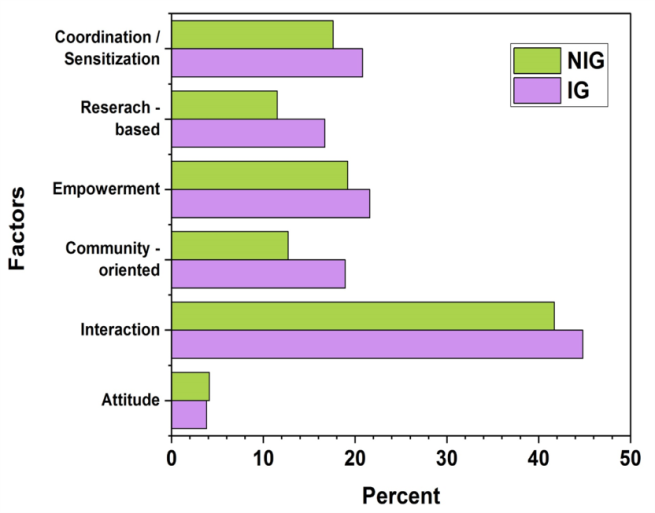
Figure 1. Proportion of IEP goals by standard grade level
|
Table 1. Proportion in domain |
||
|
Percent |
||
|
|
IG |
NIG |
|
Attitude |
3,8 |
4,1 |
|
Interaction |
44,8 |
41,7 |
|
Community-oriented |
18,9 |
12,7 |
|
Empowerment |
21,6 |
19,2 |
|
Research-based |
16,7 |
11,5 |
|
Coordination/Sensitization |
20,8 |
17,6 |
\Figure 1 denotes the typical academic level of the pupils in their IEP objectives. With about 44,8 % of all objectives for children included and 41,7 % for students not participating, the Interaction goals accounted for the largest share (Table 1). Apart from the social meaning of student IG and Coordination/Sensitization goals for isolated children, the goal of Empowerment was the second goals of two groups are all very interesting. These results suggest that rather than emphasizing Research-based achievement, most goals for both groups of students focus on Interaction difficulties. Each category of learning objectives made up one-third of the total objectives, and students in the IG and NIG groups set approximately the same Quantitative reasoning, Literacy and Written expression objectives is equal (see table 2).
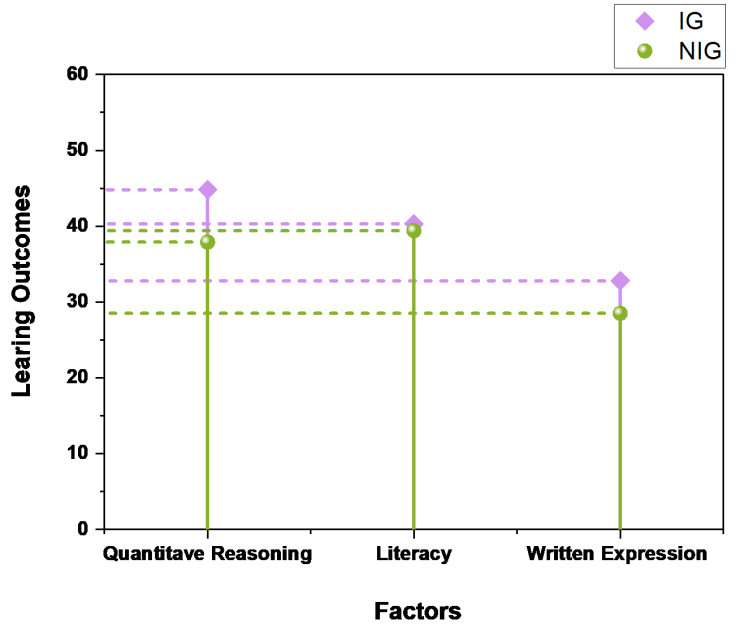
Figure 2. Academic goals
|
Table 2. Academic goals |
||
|
Learning outcomes |
IG |
NIG |
|
Quantitative reasoning |
44,8 |
37,9 |
|
Literacy |
40,3 |
39,4 |
|
Written expression |
32,8 |
28,5 |
Figure 2 denotes the outcomes of academic goals, and table 2 represents the numerical values of academic goals. Every academic objective in the sample was developed the requirements for kindergarten through fourth grade. For instance, a student can have goals that are based on a second-grade content standard despite being in seventh grade. Nonstandard goals are those that aren’t dependent on content standards. Although these objectives do not exactly match state requirements, they have been modified to fulfil a learning need for the sample student. For instance, reading a visual timetable was one of the non-typical reading objectives in this group. Reading image schedules serves a learning need for a specific learner. It provides an alternative form of reading for meaning even though it is not expressly kind of the core curriculum. The students with autism in this sample also received non-standards-based target regions and aims generated from the content standards for kindergarten through fourth grade. Students mainly failed to achieve despite having targets dependent on early academic core areas.
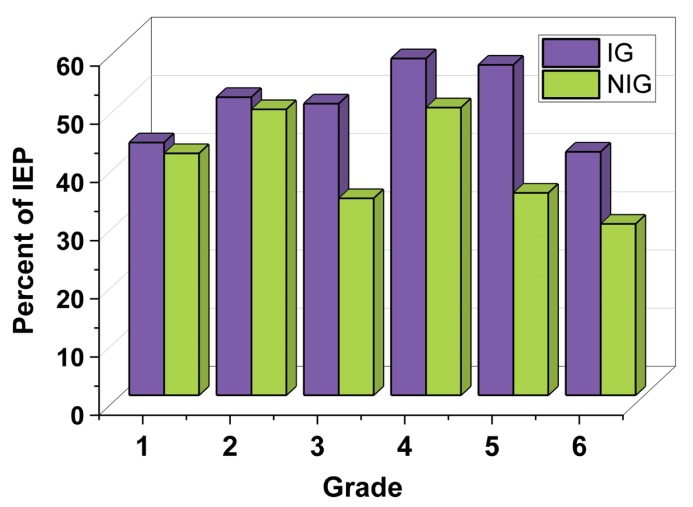
Figure 3. Graphical representation of middle school
|
Table 3. Numerical outcomes of meeting IEP goals |
||
|
Percent of IEP |
||
|
Grade |
IG |
NIG |
|
1 |
43,44 |
41,58 |
|
2 |
51,23 |
49,14 |
|
3 |
50,12 |
33,85 |
|
4 |
57,88 |
49,45 |
|
5 |
56,78 |
34,78 |
|
6 |
41,85 |
29,45 |
Figure 3 illustrates how students achieve less than 60 % of their annual IEP targets. Goal attainment among groups exhibits clear variances. Table 3 denotes the numerical outcomes of meeting IEP goals by kindergarten through middle school. Among kindergarten through eighth grade, students who participated in general education achieved an average of 57,88 % of their IEP targets; the mean percentage of IEP goals attained by students who weren’t involved was 37,9 %. Since research & had not yet reached their final goal for the grade, neither group has 9th grade progress reports accessible.
To define when age and environment impact the facilities and adaptations listed in IEP documents, the children’s cumulative IEP records were used to count the amount and types of services and adjustments. Adaptations modify the setting, curriculum, or resources to help pupils engage in a learning activity. The children in this research received various changes in their IEPs, as shown in figure 4. The adaptations contained changes to the way students desired to be educated (“input”), accessibility to alter or substitute curriculum, and changes to the way students desired to show their facts (“output”), including permitting students to attend alternate exams. Positive behavioural supports and extra time were two more adaptations supporting the student’s learning style. Personnel modifications also included other experts consulting with one another to serve the student best.
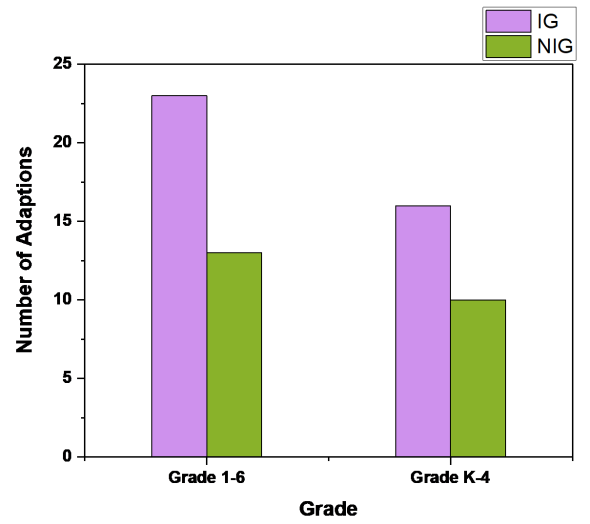
Figure 4. Adaptations in Student’s IEP
|
Table 4. Numerical values of adaptations in student’s IEP |
||
|
Number of Adaptations |
||
|
|
Grades 1-6 |
Grades K-4 |
|
IG |
23 |
16 |
|
NIG |
13 |
10 |
Figure 4 illustrates how the amount of changes in every learner and the requirements of each student should be the driving force behind the development of modifications and services, with IEPs differing based on grade and placement. Table 4 denotes the numerical values of adaptations in a student’s IEP. Fewer adaptations are present in early elementary school pupils (K–4) compared to middle school students (Grades 1–6). Students who participate in IG plans also require new adjustments in their IEPs than students who don’t participate. This implies that additional accommodations are given to students to enable them to succeed as they move into higher grades with increasingly abstract curricula. This implies that additional accommodations are given phases suggests which curricular modifications that take place in standard education settings have less of an effect on these students because an individualized curriculum has been offered without a requirement for broad variations or that excluded students have low accessibility to the core curriculum and thus a common necessity for modified resources.
DISCUSSION
The autistic students in this research had a sizable quantity of IEP aims and facilities over the course of their education. Students who were added to the program and those who have not noticed a shift in the goals and modifications are made as teenagers reach puberty. In addition to additional curriculum modifications in middle school, pupils in elementary school had many aims than their middle school counterparts. The IEP team’s decision-making on the category and quantity of facilities and adaptations associated likely to have been significantly influenced by additional factors, including student growth and achievement. These findings collectively imply that educational priorities change as adolescents approach adolescence and that IEP formation and content can be influenced by age. IEP teams presumably developed more overall goals during elementary school to address skill inadequacies while participating in the curriculum. In this research, discovered children in NIG sites regardless of age were additionally inclined to have procedural skill objectives than applicable skill goals indicating that they were also not receiving guidance in the practical uses of these abilities. The capacity to apply information and solve issues has extensive consequences for quality-of-life results. Applied education and learning improve competency and independence by teaching students to recognize, address, and self-analysis the issues and possible remedies. It shows that IEP teams include student placement when setting objectives, despite the IEP being a highly personalized file.
CONCLUSION
Academic status and cognitive age are important factors in IEPs for individuals with autism. Summary: The cognitive age of people with autism depends on their specific cognitive development, advantages. They have different psychological requirements managed, and a supportive and tailored environment that fosters learning and development is the goal of learning Environment in IEPs. Efforts should be made to improve educational programs by addressing these challenges for adults with autism. This includes integrating and implementing customized learning for students, life skills training communication needs, fostering emotionally friendly environments, and transition prioritization. By providing specialized professional development for teachers and educational programs for individuals with autism can help It fosters their intellectual growth, addresses their specific obstacles, independence, social integration and fluency Establishing an inclusive and personalized learning environment facilitates the transition to adulthood. To continuously enhance the results of educational programs for individuals with autism, a research can be conducted, stakeholders can work together, and evidence-based strategies can be used. Applying objectives from the IEP plan to real classroom practices is also excluded from this research.
Limitation and future scope
Overall, this research ‘s findings indicate that age and placement can impact the IEP team’s choices and the creation of IEPs for autistic teenagers. While creating IEP goals, services, and adaptations, IEP teams are impacted by each student’s unique qualities, age, and placement. Assuming the contents of IEPs is meant to be entirely motivated by an individual student requirement. According to the results of the research, teachers’ students Age and classroom environment when developing individualized education plans for each student. Furthermore, the benefits of a rigorous and structured curriculum for students with autism cannot be overstated. The General education systems generally adhere to national content standards and tests, protecting its employees. The practices focus on students’ ability to meet standards and pass required tests. This shows the importance Training students with autism using a regular education curriculum. A strong body of in-depth research Assist in integrating IEP development into standard educational programs. Future studies are required to ascertain the relationship between the effectiveness of written goals and accommodations and students’ development in the curriculum and their actual execution in day-to-day classroom activities.
REFERENCES
1. Saarinen AI, Lipsanen J, Hintsanen M, Huotilainen M, Keltikangas-Jarvinen L. The use of digital technologies at school and cognitive learning outcomes: A population-based study in Finland. International Journal of Educational Psychology. 2021 Feb;10(1):1-26. DOI: 10.17583/ijep.2021.4667.
2. Macoun SJ, Schneider I, Bedir B, Sheehan J, Sung A. Pilot study of an attention and executive function cognitive intervention in children with autism spectrum disorders. Journal of autism and developmental disorders. 2021 Aug;51:2600-10. https://doi.org/10.1007/s10803-020-04723-w.
3. Wyman, J. and Claro, A., (2020). The UCLA PEERS school-based program: Treatment outcomes for improving social functioning in adolescents and young adults with autism spectrum disorder and those with cognitive deficits. Journal of autism and developmental disorders, 50, pp.1907-1920.
4. Findley JA, Ruble LA, McGrew JH. Individualized education program quality for transition age students with autism. Research in autism spectrum disorders. 2022 Mar 1;91:101900. https://doi.org/10.1016/j.rasd.2021.101900.
5. Uddin LQ. Brain mechanisms supporting flexible cognition and behavior in adolescents with autism spectrum disorder. Biological Psychiatry. 2021 Jan 15;89(2):172-83. https://doi.org/10.1016/j.biopsych.2020.05.010
6. Huang CL, Luo YF, Yang SC, Lu CM, Chen AS. Influence of students’ learning style, sense of presence, and cognitive load on learning outcomes in an immersive virtual reality learning environment. Journal of Educational Computing Research. 2020 Jun;58(3):596-615. https://doi.org/10.1177/0735633119867422.
7. Müller FA, Wulf T. Differences in learning effectiveness across management learning environments: A cognitive load theory perspective. Journal of Management Education. 2024 Aug;48(4):802-28. https://doi.org/10.1177/10525629231200206.
8. Andersen MS, Makransky G. The validation and further development of a multidimensional cognitive load scale for virtual environments. Journal of Computer Assisted Learning. 2021 Feb;37(1):183-96. https://doi.org/10.1111/jcal.12478.
9. Tugtekin U, Odabasi HF. Do interactive learning environments have an effect on learning outcomes, cognitive load and metacognitive judgments?. Education and Information Technologies. 2022 Jun;27(5):7019-58. https://doi.org/10.1007/s10639-022-10912-0.
10. Beege M, Nebel S, Schneider S, Rey GD. The effect of signaling in dependence on the extraneous cognitive load in learning environments. Cognitive Processing. 2021 May;22(2):209-25. https://doi.org/10.1007/s10339-020-01002-5.
11. Yang H, Codding D, Mouza C, Pollock L. Broadening participation in computing: Promoting affective and cognitive learning in informal spaces. TechTrends. 2021 Mar;65:196-212. https://doi.org/10.1007/s11528-020-00562-9.
12. Newbury J, Justice LM, Jiang HH, Schmitt MB. Cognitive, noncognitive, and home environment correlates of reading difficulties in primary-grade students with language impairment. Journal of Speech, Language, and Hearing Research. 2020 Jun 22;63(6):1933-46. https://doi.org/10.1044/2020_JSLHR-19-00363.
13. Stanton LA, Bridge ES, Huizinga J, Benson-Amram S. Environmental, individual and social traits of free-ranging raccoons influence performance in cognitive testing. Journal of Experimental Biology. 2022 Sep 15;225(18):jeb243726. https://doi.org/10.1242/jeb.243726.
14. Hurwitz S, Garman-McClaine B, Carlock K. Special education for students with autism during the COVID-19 pandemic:“Each day brings new challenges”. Autism. 2022 May;26(4):889-99. https://doi.org/10.1177/13623613211035935.
15. Lee J, Soleimani F, Hosmer IV J, Soylu MY, Finkelberg R, Chatterjee S. Predicting Cognitive Presence in At-Scale Online Learning: MOOC and For-Credit Online Course Environments. Online Learning. 2022 Mar;26(1):58-79.
16. Vivanti G, Bent C, Capes K, Upson S, Hudry K, Dissanayake C, Victorian ASELCC Team. Characteristics of children on the autism spectrum who benefit the most from receiving intervention in inclusive versus specialised early childhood education settings. Autism Research. 2022 Nov;15(11):2200-9. https://doi.org/10.1002/aur.2815.
CONFLICTS OF INTEREST
None.
FINANCING
None.
AUTHORSHIP CONTRIBUTION
Conceptualization: Anubhav Bhalla, Sidhant Das, Neha Rana, Geetika M. Patel, Sanjay Thorat, Sangita Jena.
Investigation: Anubhav Bhalla, Sidhant Das, Neha Rana, Geetika M. Patel, Sanjay Thorat, Sangita Jena.
Methodology: Anubhav Bhalla, Sidhant Das, Neha Rana, Geetika M. Patel, Sanjay Thorat, Sangita Jena.
Writing - original draft: Anubhav Bhalla, Sidhant Das, Neha Rana, Geetika M. Patel, Sanjay Thorat, Sangita Jena.
Writing - review and editing: Anubhav Bhalla, Sidhant Das, Neha Rana, Geetika M. Patel, Sanjay Thorat, Sangita Jena.