doi: 10.56294/hl2024.341
REVIEW
University Students Mental Health Literacy: A Systematic Review
Alfabetización en Salud Mental de Estudiantes Universitarios: Una Revisión Sistemática
Jonathan Martínez Líbano1  *,
Dagna Osorio Arévalo2
*,
Dagna Osorio Arévalo2  *,
Analía Soto Valdivia2 *, Guillermo
Barahona-Fuentes3 *,
Roberto Iturra Lara4 *
*,
Analía Soto Valdivia2 *, Guillermo
Barahona-Fuentes3 *,
Roberto Iturra Lara4 *
1Universidad Andrés Bello, Facultad de Educación y Ciencias Sociales. Santiago Chile.
2Universidad de Las Américas, Escuela Psicología. Viña del Mar, Chile.
3Universidad de Las Américas, Núcleo de Investigación en Salud, Actividad Física y Deporte ISAFYD. Viña del Mar 2531098, Chile.
4Universidad San Sebastián, Facultad de Ciencias para el Cuidado de la Salud. Concepción, Chile.
Cite as: Martínez Líbano J, Osorio Arévalo D, Soto Valdivia A, Barahona-Fuentes G, Iturra Lara R. University Students Mental Health Literacy: A Systematic Review. Health Leadership and Quality of Life. 2024; 3:.341. https://doi.org/10.56294/hl2024.341
Submitted: 29-05-2024 Revised: 21-09-2024 Accepted: 14-12-2024 Published: 15-12-2024
Editor: PhD.
Prof. Neela Satheesh 
Corresponding Author: Jonathan Martínez Líbano *
ABSTRACT
Introduction: mental health literacy (MHL) refers to the knowledge and beliefs related to recognizing, managing, and preventing mental disorders. University students’ understanding of mental health is crucial, as this population faces significant psychological challenges. This systematic review aimed to assess the level of MHL among university students and identify key factors influencing their mental health knowledge.
Method: a systematic review was conducted following PRISMA guidelines. Literature was searched in Web of Science, Scopus, PubMed, PsycINFO, and Medline for studies published between January 2020 and December 2024. Eleven relevant articles were selected based on inclusion criteria. Data were extracted and analyzed to determine the main factors affecting MHL among university students.
Results: findings revealed that MHL varies significantly among students and is influenced by multiple factors. Sociodemographic characteristics, cultural diversity, stigmatization, psychiatric history, and personal experiences with mental illness or psychological distress were identified as key determinants of MHL levels. Limited awareness and persistent stigma were common barriers affecting students’ ability to recognize and seek help for mental health conditions.
Conclusions: university students’ MHL is shaped by diverse personal and contextual factors. Addressing stigma and enhancing awareness through targeted educational interventions could improve mental health outcomes in academic settings. Future research should explore effective strategies to increase MHL and reduce barriers to mental health care among students.
Keywords: Mental Health Literacy; Mental Health; Well-Being; University Students.
RESUMEN
Introducción: la alfabetización en salud mental (ASM) se refiere al conocimiento y las creencias relacionadas con el reconocimiento, manejo y prevención de los trastornos mentales. La comprensión de la salud mental por parte de los estudiantes universitarios es fundamental, ya que esta población enfrenta importantes desafíos psicológicos. Esta revisión sistemática tuvo como objetivo evaluar el nivel de ASM entre los estudiantes universitarios e identificar los factores clave que influyen en su conocimiento sobre salud mental.
Método: se realizó una revisión sistemática siguiendo las directrices PRISMA. Se llevó a cabo una búsqueda bibliográfica en Web of Science, Scopus, PubMed, PsycINFO y Medline para estudios publicados entre enero de 2020 y diciembre de 2024. Se seleccionaron once artículos relevantes según los criterios de inclusión.
Los datos fueron extraídos y analizados para determinar los principales factores que afectan la ASM en estudiantes universitarios.
Resultados: los hallazgos revelaron que la ASM varía significativamente entre los estudiantes y está influenciada por múltiples factores. Se identificaron las características sociodemográficas, la diversidad cultural, la estigmatización, los antecedentes psiquiátricos y las experiencias personales con enfermedades mentales o angustia psicológica como determinantes clave de los niveles de ASM. La falta de conciencia y el estigma persistente fueron barreras comunes que afectaron la capacidad de los estudiantes para reconocer y buscar ayuda para problemas de salud mental.
Conclusiones: la ASM en estudiantes universitarios está determinada por diversos factores personales y contextuales. Abordar el estigma y mejorar la conciencia a través de intervenciones educativas específicas podría mejorar los resultados en salud mental en entornos académicos. Investigaciones futuras deben explorar estrategias efectivas para aumentar la ASM y reducir las barreras al acceso a la atención en salud mental entre los estudiantes.
Palabras clave: Alfabetización en Salud Mental; Salud Mental; Bienestar; Estudiantes Universitarios.
INTRODUCTION
The mental health of university students has increasingly become a critical public health issue due to its significant impact on academic performance, personal development, and overall well-being. Research shows that approximately half of all mental disorders emerge before adolescence, and nearly three-quarters develop by the mid-20s. Among college-age individuals, around 39 % report having a mental health diagnosis, highlighting the urgency of addressing this growing concern.(1,2) Mental health challenges disrupt students’ ability to succeed academically, form meaningful relationships, and prepare for future careers, underscoring the importance of understanding and mitigating these issues.(3)
In Chile, the mental health of university students has been under scrutiny, with studies indicating that 15 % of students experience moderate to severe depressive symptoms.(4) The COVID-19 pandemic further exacerbated this situation, with more than 50 % of students reporting depressive and anxiety symptoms in post-pandemic studies.(5,6) Despite the evident need for support, many students fail to seek professional help, often due to barriers such as public stigma, self-stigma, and a lack of mental health literacy.(7) These challenges can lead to untreated mental illnesses and worsen mental health outcomes,(8) making it imperative to address the factors that hinder help-seeking behaviors and promote better access to psychological resources.
Mental health literacy, which encompasses the knowledge and attitudes that enable the recognition, management, and prevention of mental health issues, has emerged as a key factor in improving help-seeking behavior and mental health outcomes.(9) Higher levels of mental health literacy are associated with greater awareness of mental health challenges, reduced stigma, and increased utilization of mental health services.(10) Furthermore, mental health literacy empowers students to adopt proactive strategies to maintain their emotional well-being, recognize symptoms of distress, and access appropriate support.(11)
Universities play a vital role in fostering mental health literacy among students.(12) They are uniquely positioned to implement scalable and sustainable mental health promotion programs that address emotional self-awareness, cognitive skills, self-management strategies, and the broader determinants of mental health, including biological, psychological, and social factors.(13,14) By integrating mental health education into the curriculum and creating supportive environments, universities can help students develop resilience and reduce the stigma surrounding mental illness.(15,16) These efforts are critical for ensuring that students are equipped to cope with life’s stresses and realize their full potential.(17)
However, despite increasing recognition of its importance, mental health literacy remains insufficiently addressed in many educational contexts.(18,19) Limited knowledge of mental health issues can perpetuate stigma, hinder help-seeking behaviors, and exacerbate the challenges faced by students.(20) Enhancing mental health literacy is thus an essential focus for public health initiatives, as it fosters awareness, supports early intervention, and promotes positive attitudes toward mental health care.(21)
Given the profound impact of mental health literacy on university students, this systematic review seeks to explore its implications in their lives. Specifically, the research question posed is: What are the implications of knowledge of mental health in the life of university students? By addressing this question, the review aims to provide evidence-based insights that inform the development of effective strategies and policies to support students’ mental health and well-being.
METHOD
Design
This systematic review was conducted following the PRISMA guidelines (Preferred Reporting Items for Systematic Reviews and Meta-Analyses) to ensure transparency and quality throughout the process.(22)
Information Sources and Search Strategy
The search for studies was conducted in the Web of Science, Scopus, and APA PsycArticles databases. The time frame considered included publications from January 2018 to December 2024, covering a six-year period to ensure the relevance and timeliness of findings in the field of mental health literacy, a rapidly evolving area. Searches were performed in the title, abstract, and keywords fields of each database using the terms: “Mental Health Literacy” AND [“university students” OR “college students” OR “undergraduate students”], combined with the boolean operators AND and OR.
To broaden the coverage, integrated tools of each database were utilized. Two independent reviewers conducted the search and initial screening of articles. In cases of disagreement, a third reviewer was consulted to reach a consensus. The study selection process was represented through a PRISMA flow diagram, detailing the stages of identification, screening, and exclusion of studies (figure 1).
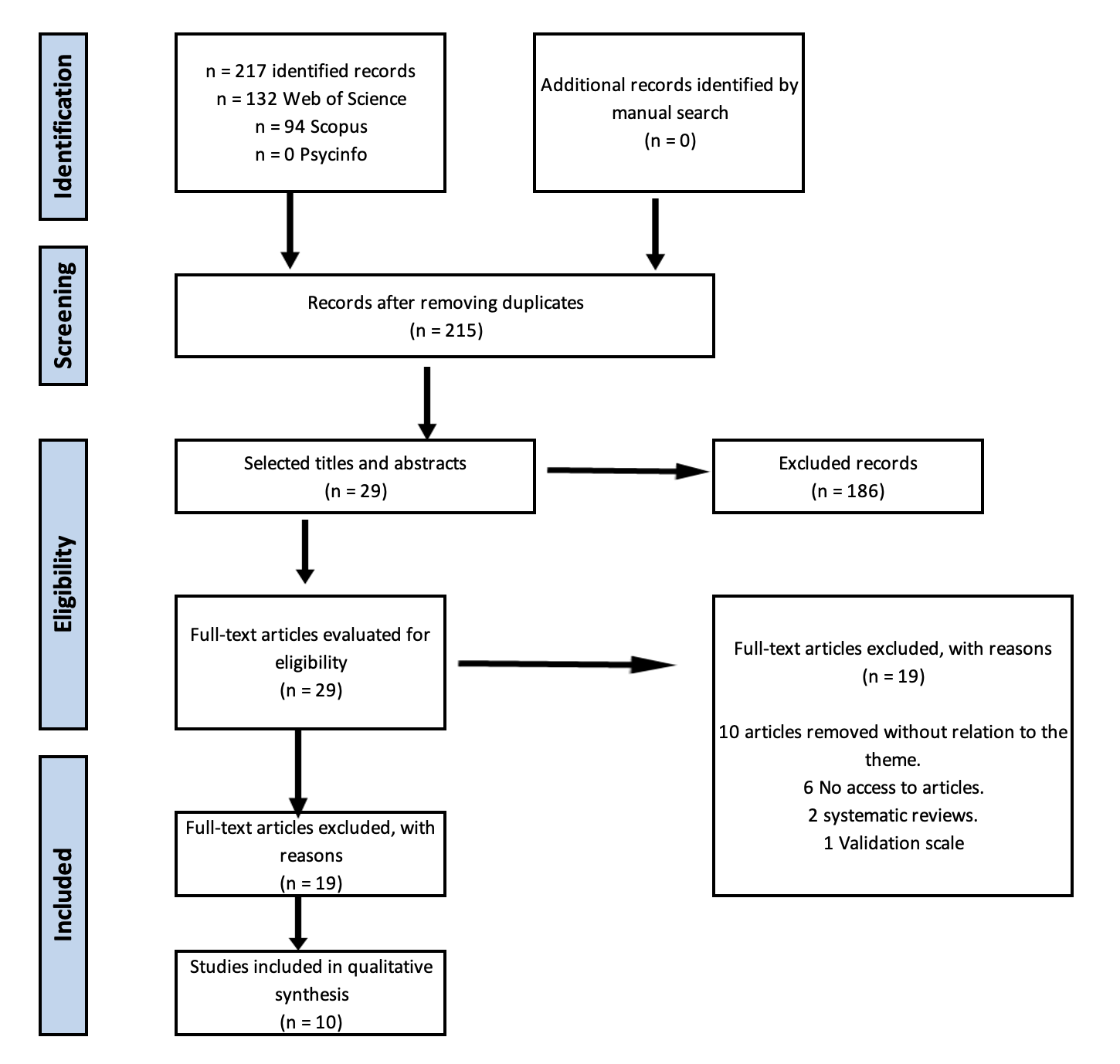
Figure 1. Prisma flow chart
Inclusion and Exclusion Criteria
The articles included in this systematic review met the following criteria, structured using the PICOS format. The population comprised university students, including college and undergraduate students. The interventions were studies assessing mental health literacy. For the comparator, the different ways of assessing mental health literacy were accepted. The outcomes included findings related to levels of mental health literacy. The design was limited to observational studies with a cross-sectional design.
Studies were excluded if they did not align with the defined time frame, targeted populations other than university students, or did not specifically address mental health literacy.
Procedure
The selection process was carried out in multiple stages. Duplicates were initially removed using specialized software and manual review. Subsequently, an initial screening based on titles and abstracts was performed, excluding studies that did not meet the inclusion criteria. The full texts of the preselected articles were then reviewed thoroughly by two independent reviewers, strictly applying the inclusion and exclusion criteria. Disagreements were resolved through discussion and consultation with a third reviewer.
Data Extraction
Data extraction was performed using a table created in Microsoft Excel. Extracted data included: author, year, country, sample size, design, measures, and main findings. This process was conducted independently by two reviewers to ensure accuracy and avoid bias. All discrepancies were resolved by consensus.
Study Selection Procedure
Among the inclusion criteria for the present study, we find:
The publication dates span from January 2018 to January 2024. The selection of this specific five-year period was deliberately made in order to encompass the latest and most pertinent advancements in the domain of mental health literacy. Due to the dynamic and continuously expanding nature of this industry, it is essential to incorporate research that encompasses the most up-to-date trends, practices, and theories. A time constraint of five years strikes a balance between the requirement for promptness and the necessity to gather a substantial quantity of data.
Target demographic, college students. We directed our attention towards this particular demographic owing to the distinctiveness of the psychological difficulties encountered by university students. During this phase of life, there are often major changes and pressures, which makes it more important for individuals in this age group to have a good understanding of mental health.
Research Method, Cross-sectional studies. Cross-sectional research are optimal for comprehending present circumstances and associations at a particular moment in time. They are especially valuable for discovering and assessing widespread patterns and attitudes regarding mental health knowledge among college students.
Linguistic medium, written compositions in both the English and Spanish languages. By include studies conducted in both English and Spanish, we are able to encompass a broad spectrum of research on a global scale, hence enhancing the diversity and inclusiveness of the data. Acquiring a more comprehensive comprehension of the subject matter is vital. Subject, Centered on the understanding and knowledge of mental health. The use of this theme approach guarantees that all incorporated studies are directly pertinent to our specific field of interest. By prioritizing mental health literacy, we may acquire precise and comprehensive knowledge that is essential for comprehending and enhancing education and interventions in this domain.
Among the exclusion criteria for the present study, we find:
Publications beyond the designated timeframe (January 2018–January 2024). The emphasis is placed on the most up-to-date and pertinent information in mental health literacy, disregarding earlier studies to accurately represent current trends and practices.
Non-university student studies. To ensure the findings remain relevant and specific, it is important to solely concentrate on the university population and exclude studies including other groups.
Nonetheless, articles unrelated to the topic of mental health literacy. Studies that are not directly related to this issue are removed in order to maintain the cohesion and thematic relevance of the review.
Research employing alternative methodological designs to cross-sectional studies. Cross-sectional studies are chosen for their capacity to offer a distinct and up-to-date snapshot of a situation at a particular moment, while rejecting designs that may introduce irrelevant variables to the review’s objectives.
RESULTS
A total of 217 publications on the subject of mental health literacy among university students were identified. After removing duplicates, 215 unique records remained. Screening the titles and abstracts led to the exclusion of 186 articles, while a full-text review of 29 articles resulted in the exclusion of 19. Ultimately, eight articles met the inclusion criteria and were selected for the systematic review.
Table 1 provides a summary of the study’s features and the review’s conclusions. There are a total of 9569 higher education students in the sample, which consists of 10 articles. There were 8 cross-sectional studies, 1 experimental and 1 longitudinal study. The ten studies were conducted in eight different nations: Portugal (n = 1), the United States (n = 3), Iran (n = 1), Taiwan (n = 1), Arabia (n = 1), Nepal (n =1), China (n =1), Vietnam and Cambodia (n = 1). A total of n = 10 were used in each study.
|
Table 1. Summary of the characteristics of the study sample, study design, assessment tools used, prevalence rates, and main findings |
||||||
|
Primary author |
Year |
Country |
Design |
Measures |
Sample |
Main Findings |
|
Teixeira(23) |
2022 |
Portugal |
Cross-sectional |
PMHQ, PVS y MHKQ |
3189 |
Students without a scholarship scored higher on positive health than those who did have a scholarship. Students without a scholarship scored significantly higher on the factor of self-control, autonomy, and interpersonal relationship skills. Students who were not displaced from their usual homes reported higher self-control than students who were displaced from their homes. |
|
Aller(24) |
2022 |
USA |
Cross-sectional |
PHQ-9, GAD-7, MHAA-AT |
617 |
Leveraging the strengths of students with lived experience at MHI contributes to prevention efforts. At the individual level, it emphasizes lived experience as a strength, rather than a deficit. |
|
Mohammad(25) |
2022 |
Iran |
Cross-sectional |
MHLS Y MHPK |
543 |
71 % of the participants obtained a sufficient score on the MHPK scale, on the disease-oriented MHL scale the participants reached 65 %, and only 30 % showed insufficient positive MHL. |
|
Lai(26) |
2022 |
Taiwan |
Longitudinal |
MHLS Y MHPK |
48 |
At the first moment of applying the Mental Health Literacy Scale there is a lower score compared to the MHL, after applying the study plan to the students regarding the MHL a change in the scores is observed, this being a more significant result. higher than the first time |
|
Gorczynski(27) |
2022 |
USA |
Cross-sectional |
MHLS, GHSQ, K10, WEMWBS y SCS-SF |
326 |
Women have better literacy than men, although people who already had or had a diagnosis of a mental health disorder had higher levels of mental health literacy. |
|
Dessauvagie(28) |
2022 |
Vietnam and Cambodia |
Cross-sectional |
MHLS |
1032 |
Students from Vietnamese and Cambodian universities had a lower MHL level, compared to students from the UK or Australia, compared to the South East Asian sample or other Vietnamese samples MHL level among students was in the same range. |
|
Alshehri(29) |
2021 |
Arabian |
Cross-sectional |
MHLS |
339 |
It can be seen that the validation of this Mental Health Literacy Scale in an Arabic version was robust and reliable. |
|
Poudel(30) |
2024 |
Nepal |
Cross-sectional |
Mental Health Literacy Questionnaire (MHLq-young adult), Attitudes Towards Mental Health Problems (ATMHP) |
385 |
No significant relationship between MHL and ATMHP. Demographic factors influenced self-help strategies and stereotypes. MHL alone may not improve attitudes towards mental health problems. |
|
Miles(31) |
2024 |
USA |
Cross-sectional |
Mental Health Literacy Assessment for College Students (MHLA-c) |
617 |
Mental health literacy scores differed significantly across college majors, with psychology majors scoring highest. Accounting, business, biology, and nursing majors scored significantly lower. |
|
Zhang et al.(32) |
2024 |
China |
Experimental |
MHLS |
2473 |
Public art education significantly improved mental health literacy in the experimental group, particularly in recognizing psychological disorders and promoting help-seeking behavior. |
Measurement Scales Used
Various scales were utilized in the studies (n = 11), among which the PMHQ (n = 1); PVS (n = 1); MHKQ (n = 1); PHQ-9 (n = 2); GAD-7 (n = 1); MHAA-AT (n = 1); MHLS-FR (n = 1); MHLS (n = 6); MHPK (n = 2); GHSQ (n = 1); K10 (n = 1); WEMWBS (n = 1); SCS-SF (n = 1); MHL-q (n = 1); ATMHP (n = 1); MHLA-c (n= 1).
|
Table 2. Measurement instruments used in studies of Mental Health Literacy in University Students |
||
|
Abbreviation of the Scale |
Scale Full Name |
Measurement |
|
PMHQ |
Positive Mental Health Questionnaire |
Positive Mental Health |
|
PVS |
Psychological Vulnerability Scale |
Psychological Vulnerability |
|
MHKQ |
Mental Health Knowledge Questionnaire |
Knowledge of Mental Health |
|
PHQ-9 |
Patient Health Questionnaire |
Depression. |
|
GAD-7 |
Generalized Anxiety Disorder |
Generalized anxiety |
|
MHAA-AT |
Mental Health Awareness and Advocacy Assessment Tool |
Mental Health Awareness and Advocacy |
|
MHLS-FR |
Mental Health Literacy |
Mental Health Literacy |
|
MHPK |
Mental Health Positive Knowledge |
Positive Knowledge in Mental Health |
|
GHSQ |
General Help-Seeking Questionnaire |
General Help Search |
|
K10 |
Kessler Psychological Distress Scale 10 |
Distress |
|
WEMWBS |
Warwick-Edinburgh Mental Well-Being Scale |
Mental Wellness |
|
SCS-SF |
Self-Compassion Scale Short Form |
Self-Compassion |
|
ATMHP |
Attitudes Towards Mental Health Problems |
Mental health problems |
Main Findings
Among the main findings for mental health literacy among university students, we found that there are several variables that influence it, such as sociodemographic factors (sex, age, education, marital status, income, among others), cultural diversity, stigmatization and psychiatric history. However, there is an important factor that is related to personal experience (people who have already presented a mental illness or psychological discomfort) regarding the mental health of university students, where it is evident that they present a better knowledge of health mental.
DISCUSSION
This review explored mental health literacy among university students, identifying both positive and negative factors influencing students’ well-being. These findings highlight the complex interplay of sociodemographic, cultural, psychosocial, and behavioral factors that affect students’ mental health and their ability to access and utilize mental health resources. Understanding mental health literacy is crucial in the university context, as it directly impacts not only students’ well-being but also their academic performance and future professional success.
The transition to university life often leads to significant lifestyle changes, such as alterations in eating and sleeping habits, increased academic demands, adaptation to new environments, and separation from family.(33) According to research, these changes can heighten students’ vulnerability to psychological disorders.(34) Sociodemographic factors, such as age and sex, significantly influence mental health outcomes.(35) For instance, younger male students may be at higher risk of depressive symptoms due to traditional male stereotypes that discourage seeking help.(36) However, female students exhibit a greater overall risk of depression and anxiety, with their status as female students increasing the likelihood of mental health challenges.(37) Socioeconomic status further exacerbates these issues, as students from low-income families often face financial stress and limited parental education, which are associated with higher risks of depression.(38) Conversely, better economic status appears to mitigate psychological distress among students.(39)
Cultural factors also play a critical role in mental health, particularly in the context of cultural adaptation or acculturation.(40) Students who successfully adapt to new social contexts tend to report better mental health outcomes.(19) However, the processes and outcomes of acculturation vary significantly among groups and individuals, even within the same cultural environment.(41) Successful adaptation often depends on support systems, language proficiency, and the acceptance of cultural differences.(42) This highlights the importance of tailored programs to assist international and minority students, which can also foster greater inclusion and cultural competence within universities.(43)
Psychosocial factors heavily influence mental health literacy in university students. Common issues include excessive pressure to succeed, poor time management, procrastination, exam-related anxiety, and low self-confidence.(44) Dysfunctional coping strategies and low resilience negatively impact mental health literacy, whereas higher levels of self-esteem and social support act as protective factors.(45) Universities can play a pivotal role in addressing these challenges by offering workshops on stress management and emotional intelligence, which have shown promising results in enhancing students’ resilience and coping mechanisms.(46) Additionally, integrating these workshops into mandatory student programs can ensure broader participation and long-term benefits.
Risky health behaviors are another significant determinant of mental health outcomes. Issues such as depression, poor sleep hygiene, stress, and anxiety are strong predictors of academic performance. Behaviors like tobacco and alcohol consumption during this stage of life compound these challenges. Promoting healthy behaviors and mental health awareness is essential for improving academic performance and overall well-being. Campaigns targeting these behaviors should incorporate peer-led initiatives and community engagement to foster a sense of belonging and shared responsibility. Evidence from successful interventions, such as campus-wide wellness campaigns in the United States, demonstrates the potential of these approaches in reducing risky behaviors and improve mental health.
Practical Implications of the Finding
The current research emphasizes the significance of cultural and sociodemographic elements in the understanding and knowledge of mental health. These findings indicate that in order to achieve desired outcomes, interventions should be tailored to fit the cultural context. Universities must establish programs that are cognizant of the varied cultural and social requirements of their student body. Consequently, it is imperative for university policy to prioritize awareness campaigns that elucidate mental diseases and foster a culture of support on campus. The study emphasizes the significance of digital media in enhancing mental health literacy. Consequently, universities can integrate online platforms and mobile applications into their mental health support resources, thereby promoting convenient access to information and guidance. Moreover, our research indicates that mental health issues have an impact on both academic and personal achievements. Universities have the ability to establish extensive initiatives that not only tackle mental health but also encompass physical and social well-being, encompassing stress management, nutrition, and exercise.
Future Research Directions
Although there have been notable strides in comprehending mental health literacy among college students, there are still various issues that have not been investigated and have good prospects for future research. These topics have the potential to not only address gaps in current understanding but also enhance interventions and policy pertaining to mental health in the university context. Subsequent investigations could examine the impact of distinct cultural and environmental elements on mental health literacy. This encompasses comparative analyses conducted across various countries or regions to gain a deeper comprehension of how the cultural and socioeconomic milieu influences the perception and handling of mental health issues among university students. Chile urgently needs to make progress in measuring mental health literacy, as this topic remains inadequately researched in our country. Further investigation is required to ascertain the enduring efficacy of mental health literacy treatments. This may involve conducting longitudinal studies that track students from their time in university and beyond, in order to evaluate the long-term viability of the impacts of these interventions. Given the growing reliance on technology and social media, it is imperative to examine the ways in which digital media and online platforms might be optimally utilized to enhance mental health literacy. Examples of this could encompass the creation and assessment of mobile applications, e-learning platforms, and social media campaigns.
CONCLUSIONS
According to the results found in relation to the mental health literacy of university students, it is concluded that there are multiple factors that affect the mental health of students such as sociodemographic factors, experiences lived in psychological disorders and / or psychological discomfort, sex as a variable, psychosocial factors. And a factor that has had an impact on students lately is related to risky behaviors for health, where the consumption of tobacco and alcohol has been increasing, being those significant predictors for students who are at a low level of literacy. in mental health.
Likewise, an important component for university students is the promotion of mental health to prevent psychological disorders or discomforts, in which universities play a fundamental role in this promotion, since in this way university students through promotion will have with the necessary tools to be able to prevent psychological disorders or discomforts, they will also be able to perform better academically.
BIBLIOGRAPHIC REFERENCES
1. Frajerman A, Chaumette B, Krebs MO, Morvan Y. Mental health in medical, dental and pharmacy students: A cross-sectional study. J Affect Disord Rep. 2022;10:100404.
2. Wang C, Yan S, Jiang H, Guo Y, Gan Y, Lv C, et al. Socio-demographic characteristics, lifestyles, social support quality and mental health in college students: a cross-sectional study. BMC Public Health. 2022;22 :1583.
3. Beasley L, Kiser R, Hoffman S. Mental health literacy, self-efficacy, and stigma among college students. Soc Work Ment Health. 2020;18 :634–50.
4. Álamo C, Antúnez Z, Baader T, Kendall J, Barrientos M, Barra D de la. The sustained increase of mental health symptoms in Chilean university students over three years. Rev Latinoam Psicol. 2020;52:71–80.
5. Martínez-Líbano J, Torres-Vallejos J, Oyanedel JC, González-Campusano N, Calderón-Herrera G, Yeomans-Cabrera MM. Prevalence and variables associated with depression, anxiety, and stress among Chilean higher education students, post-pandemic. Front Psychiatry [Internet]. 2023 [cited 2025 Jan 13];14. Available from: https://doi.org/10.3389/fpsyt.2023.1139946
6. Martínez-Líbano J, Yeomans-Cabrera MM. Depression, anxiety, and stress in the Chilean Educational System: children and adolescents post-pandemic prevalence and variables. In: Frontiers in Education. Frontiers Media SA; 2024. p. 1407021.
7. Cheng H, Wang C, McDermott RC, Kridel M, Rislin JL. Self‐stigma, mental health literacy, and attitudes toward seeking psychological help. Journal of Counseling & Development. 2018;96 :64–74.
8. Cuijpers P, Smit F, Aalten P, Batelaan N, Klein A, Salemink E, et al. The associations of common psychological problems with mental disorders among college students. Front Psychiatry. 2021;12:573637.
9. Koutra K, Pantelaiou V, Mavroeides G. Breaking barriers: Unraveling the connection between mental health literacy, attitudes towards mental illness, and self-stigma of psychological help-seeking in university students. Psychology International. 2024;6 :590–602.
10. Ma KKY, Anderson JK, Burn A. School‐based interventions to improve mental health literacy and reduce mental health stigma–a systematic review. Child Adolesc Ment Health. 2023;28 :230–40.
11. Zefeng Z. Mental Health Literacy Among Arts Students: A Comprehensive Evaluation. Educational Administration: Theory and Practice. 2024;30 :4124–9.
12. Nobre J, Oliveira AP, Monteiro F, Sequeira C, Ferré-Grau C. Promotion of mental health literacy in adolescents: a scoping review. Int J Environ Res Public Health. 2021;18 :9500.
13. Jenkins R, Gureje O. Prevention in Psychiatry. In: Tasman’s Psychiatry. Springer; 2023. p. 1–30.
14. Chen C, Chen Y, Jia X, Lei S, Yang C, Nie Q, et al. Cultural adaptation and evaluation of a school-based positive psychology intervention among Chinese middle school students: A mixed methods program design study. School Psychology. 2024;
15. Li L. Analysis of the relationship between college students’ mental health education and employability improvement. Frontiers in Educational Research. 2024;7 .
16. Wiedermann CJ, Barbieri V, Plagg B, Marino P, Piccoliori G, Engl A. Fortifying the foundations: a comprehensive approach to enhancing mental health support in educational policies amidst crises. In: Healthcare. MDPI; 2023. p. 1423.
17. Yang C, Chen A, Chen Y. College students’ stress and health in the COVID-19 pandemic: The role of academic workload, separation from school, and fears of contagion. PLoS One. 2021;16 :e0246676.
18. Nutbeam D, Lloyd JE. Understanding and responding to health literacy as a social determinant of health. Annu Rev Public Health. 2021;42 :159–73.
19. Campbell F, Blank L, Cantrell A, Baxter S, Blackmore C, Dixon J, et al. Factors that influence mental health of university and college students in the UK: a systematic review. BMC Public Health. 2022;22 :1778.
20. Hyseni Duraku Z, Davis H, Blakaj A, Ahmedi Seferi A, Mullaj K, Greiçevci V. Mental health awareness, stigma, and help-seeking attitudes among Albanian university students in the Western Balkans: a qualitative study. Front Public Health. 2024;12:1434389.
21. Patafio B, Miller P, Baldwin R, Taylor N, Hyder S. A systematic mapping review of interventions to improve adolescent mental health literacy, attitudes and behaviours. Early Interv Psychiatry. 2021;15 :1470–501.
22. Page MJ, McKenzie JE, Bossuyt PM, Boutron I, Hoffmann TC, Mulrow CD, et al. The PRISMA 2020 statement: an updated guideline for reporting systematic reviews. bmj. 2021;372.
23. Teixeira S, Ferré-Grau C, Canut TL, Pires R, Carvalho JC, Ribeiro I, et al. Positive mental health in university students and its relations with psychological vulnerability, mental health literacy, and sociodemographic characteristics: a descriptive correlational study. Int J Environ Res Public Health. 2022;19 :3185.
24. Aller TB, Fauth EB, Kelley HH, Hodgskiss S, Brown AL, Hellstern R. Associations between college students’ personal experience with mental health issues and their mental health literacy: a strengths-based perspective. Journal of Mental Health. 2024;33 :118–26.
25. Mahmoodi SMH, Ahmadzad-Asl M, Eslami M, Abdi M, Hosseini Kahnamoui Y, Rasoulian M. Mental health literacy and mental health information-seeking behavior in Iranian university students. Front Psychiatry. 2022;13:893534.
26. Lai HJ, Lien YJ, Chen KR, Lin YK. The effectiveness of mental health literacy curriculum among undergraduate public health students. Int J Environ Res Public Health. 2022;19 :5269.
27. Gorczynski P, Sims-Schouten W. Evaluating mental health literacy amongst US college students: a cross sectional study. Journal of American college health. 2024;72 :676–9.
28. Dessauvagie A, Dang HM, Truong T, Nguyen T, Nguyen BH, Cao H, et al. Mental Health Literacy of University Students in Vietnam and Cambodia. International Journal of Mental Health Promotion. 2022;24 .
29. Alshehri E, Alosaimi D, Rufaidi E, Alsomali N, Tumala R. Mental health literacy scale Arabic version: a validation study among Saudi university students. Front Psychiatry. 2021;12:741146.
30. Poudel DB, Sharif LS, Acharya S, Mahsoon A, Sharif K, Wright R. Mental Health Literacy and Attitudes Towards Mental Health Problems Among College Students, Nepal. Behavioral Sciences. 2024;14 :1189.
31. Miles RT, Krishnan A, Rabin LA, Brandt SA, Crispino ML. Does major make a difference? Mental health literacy and its relation to college major in a diverse sample of undergraduate students. Discover Mental Health. 2024;4 :42.
32. Zhang S, Zhao L. The impact of public art education on college students’ mental health literacy. Front Public Health. 2024;12:1427016.
33. Van der Werf ET, Busch M, Jong MC, Hoenders HJR. Lifestyle changes during the first wave of the COVID-19 pandemic: a cross-sectional survey in the Netherlands. BMC Public Health. 2021;21 :1226.
34. Limone P, Toto GA. Factors that predispose undergraduates to mental issues: A cumulative literature review for future research perspectives. Front Public Health. 2022;10:831349.
35. Wang J, Wang Y, Lin H, Chen X, Wang H, Liang H, et al. Mental health problems among school-aged children after school reopening: A cross-sectional study during the COVID-19 post-pandemic in east China. Front Psychol. 2021;12:773134.
36. Li T, Gal D. The Marlboro men don’t cry: Understanding the gendered perceptions of people seeking mental health care. J Exp Psychol Appl. 2022;28 :423.
37. Lee J, Jeong HJ, Kim S. Stress, anxiety, and depression among undergraduate students during the COVID-19 pandemic and their use of mental health services. Innov High Educ. 2021;46:519–38.
38. Wilcox MM, Barbaro-Kukade L, Pietrantonio KR, Franks DN, Davis BL. It takes money to make money: Inequity in psychology graduate student borrowing and financial stressors. Train Educ Prof Psychol. 2021;15 :2.
39. Naylor R. Key factors influencing psychological distress in university students: The effects of tertiary entrance scores. Studies in Higher Education. 2022;47 :630–42.
40. Fatima M, Niazi L. Relationship Between Acculturation Difficulty, Coping Skills, and Psychological Wellbeing Among Young Adults. Pakistan Journal of Psychological Research. 2024;39 :93–109.
41. Lee TK, Meca A, Schwartz SJ, Cobb CL, Song H, Duque M, et al. Distinct co‐occurrence patterns of acculturation and perceived context of reception between weekdays and weekends among Hispanic college students. J Clin Psychol. 2023;79 :773–802.
42. Gong Y, Gao X, Li M, Lai C. Cultural adaptation challenges and strategies during study abroad: New Zealand students in China. Language, Culture and Curriculum. 2021;34 :417–37.
43. Belando-Montoro MR, Naranjo-Crespo M, Carrasco-Temino MA. Barriers and facilitators to the retention and participation of socially, economically, and culturally disadvantaged university students. An international systematic review. Int J Educ Res. 2022;113:101968.
44. Kakar MK, Fatima S, Malik MS. Effect of anxiety on students’ academic performance at secondary school level. Review Journal of Social Psychology & Social Works. 2024;2 :230–9.
45. Teh BL Sen, Ang JK, Koh EBY, Pang NTP. Psychological resilience and coping strategies with anxiety among Malaysian medical students during the COVID-19 pandemic. Int J Environ Res Public Health. 2023;20 :1894.
46. Chandra Y. Online education during COVID-19: perception of academic stress and emotional intelligence coping strategies among college students. Asian education and development studies. 2021;10 :229–38.
FINANCING
The authors did not receive financing for the development of this research.
CONFLICT OF INTEREST
The authors declare that there is no conflict of interest.
AUTHORSHIP CONTRIBUTION
Data curation: Jonathan Martínez Líbano, Dagna Osorio Arévalo, Analía Soto Valdivia, Guillermo Barahona-Fuentes, Roberto Iturra Lara.
Formal analysis: Jonathan Martínez Líbano, Dagna Osorio Arévalo, Analía Soto Valdivia, Guillermo Barahona-Fuentes, Roberto Iturra Lara.
Drafting - original draft: Jonathan Martínez Líbano, Dagna Osorio Arévalo, Analía Soto Valdivia, Guillermo Barahona-Fuentes, Roberto Iturra Lara.
Writing - proofreading and editing: Jonathan Martínez Líbano, Dagna Osorio Arévalo, Analía Soto Valdivia, Guillermo Barahona-Fuentes, Roberto Iturra Lara.